


 Maximum quality with patented formulas
 24/48-hour delivery
 100% secure payments
 Expert advice
SLOW RELEASE PROTEIN
The striking evolution of the sports nutrition industry in recent times has resulted, among other things, in an increase in research aimed at developing innovative products. As a result, the supplements available on the market are becoming more and more varied, and their specialisation is growing to better suit each specific need. Due to the prominence of protein in the sector, many of the new products are based on this macronutrient, such as the appearance of slow-release proteins.
External aspects such as texture, flavour or format were some of the first to have different varieties, but, in this case, we are dealing with something much more structural: the speed of absorption. With sequential (or slow-release) protein supplements, you get a nutritional intake that is spread out over time, ideal for certain situations.
The emergence of slow-release protein
Today, the supplementation industry offers solutions for absolutely any sporting need, regardless of the personal characteristics of each client, as there are products for all levels of demand and professionalism. But this has not always been the case.
Before the fitness revolution took place, which filled gyms and nutrition shops, supplements were exclusively aimed at a very small social group: top professional sportsmen and women. However, the number of bodybuilding enthusiasts began to increase exponentially, and the philosophy of self-improvement spread. As a result, interest in sports nutrition was awakened in people whose relationship with physical exercise was not strictly professional, creating an amateur demand that had never existed before.
To satisfy this new need, new companies appeared, whose production focused precisely on expanding the supplements available. Thus, the variety on offer soared, with the addition of new products that, from their inception, sought to adapt to the objectives of amateur athletes.
In turn, industry revenues increased, driving research and development efforts across all companies, and elite athletes also benefited from the modernisation of sports nutrition. In fact, the emergence of products such as slow-release protein positively affected all types of athletes, as its properties have very specific functions that make it perfect for certain situations and goals.
What is sequential protein for?
Before explaining the benefits of this type of supplements, it is necessary to explain what makes them special. It is a combination of different types of protein, which can contain up to eight different kinds. Each of them has its own characteristics, and the rate at which they are released into the body varies. The result of this composition is a very prolonged protein intake, which can take effect up to 6 or 7 hours after taking the supplement.
Given the properties of such a vital macronutrient for sport as protein, being able to rely on it for such a long time is a perfect option in some contexts.
Let's remember that proteins - and the amino acids that make them up - perform a triple action: they protect muscle fibres against catabolism, nourish the muscular system so that it performs better and can increase its volume, and improve recovery capacity after intense exercise.
By taking a sequential protein-based supplement at midday, you can enjoy these benefits virtually all afternoon, without having to resort to any other such product. It is therefore an ideal ally for all those who cannot provide the necessary protein intake for many hours because their work prevents them from doing so, for example. The same applies to some athletes who need to protect their muscles during the night: with this type of supplement, they can sleep soundly.
What is a slow-acting protein?
Casein is found in the lumps or curds, whereas whey protein is found in the liquid portion. Casein takes longer to digest and releases amino acids into the bloodstream more slowly.
Which protein is absorbed faster?
Whey is a "fast-acting" protein; its absorption rate has been estimated at ~ 10 g per hour. At this rate, it would only take 2 h to fully absorb a 20 g dose of whey.
Showing 1-3 of 3 item(s)

Complete milk protein with casein and whey, creamy texture

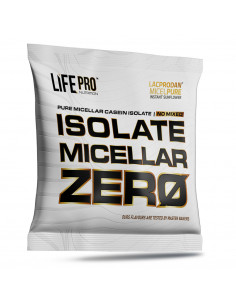
Single-dose micellar casein, slow-release, with tolerase® l
Latest reviews

LIFE PRO CASEIN GOURMET CHOCO MONKY 900G
La mejor caseína que he probado de sabor y saciante de 10, esperando probar los otrossabores

- +200 patented formulas
- +10 years of experience
- +5M satisfied customers
Quick answers backed by science: our team guides you in seconds towards the formula and protocol you need.

MORE INFORMATION ABOUT SLOW RELEASE PROTEIN
The striking evolution of the sports nutrition industry in recent times has resulted, among other things, in an increase in research aimed at developing innovative products. As a result, the supplements available on the market are becoming more and more varied, and their specialisation is growing to better suit each specific need. Due to the prominence of protein in the sector, many of the new products are based on this macronutrient, such as the appearance of slow-release proteins.
External aspects such as texture, flavour or format were some of the first to have different varieties, but, in this case, we are dealing with something much more structural: the speed of absorption. With sequential (or slow-release) protein supplements, you get a nutritional intake that is spread out over time, ideal for certain situations.
The emergence of slow-release protein
Today, the supplementation industry offers solutions for absolutely any sporting need, regardless of the personal characteristics of each client, as there are products for all levels of demand and professionalism. But this has not always been the case.
Before the fitness revolution took place, which filled gyms and nutrition shops, supplements were exclusively aimed at a very small social group: top professional sportsmen and women. However, the number of bodybuilding enthusiasts began to increase exponentially, and the philosophy of self-improvement spread. As a result, interest in sports nutrition was awakened in people whose relationship with physical exercise was not strictly professional, creating an amateur demand that had never existed before.
To satisfy this new need, new companies appeared, whose production focused precisely on expanding the supplements available. Thus, the variety on offer soared, with the addition of new products that, from their inception, sought to adapt to the objectives of amateur athletes.
In turn, industry revenues increased, driving research and development efforts across all companies, and elite athletes also benefited from the modernisation of sports nutrition. In fact, the emergence of products such as slow-release protein positively affected all types of athletes, as its properties have very specific functions that make it perfect for certain situations and goals.
What is sequential protein for?
Before explaining the benefits of this type of supplements, it is necessary to explain what makes them special. It is a combination of different types of protein, which can contain up to eight different kinds. Each of them has its own characteristics, and the rate at which they are released into the body varies. The result of this composition is a very prolonged protein intake, which can take effect up to 6 or 7 hours after taking the supplement.
Given the properties of such a vital macronutrient for sport as protein, being able to rely on it for such a long time is a perfect option in some contexts.
Let's remember that proteins - and the amino acids that make them up - perform a triple action: they protect muscle fibres against catabolism, nourish the muscular system so that it performs better and can increase its volume, and improve recovery capacity after intense exercise.
By taking a sequential protein-based supplement at midday, you can enjoy these benefits virtually all afternoon, without having to resort to any other such product. It is therefore an ideal ally for all those who cannot provide the necessary protein intake for many hours because their work prevents them from doing so, for example. The same applies to some athletes who need to protect their muscles during the night: with this type of supplement, they can sleep soundly.
What is a slow-acting protein?
Casein is found in the lumps or curds, whereas whey protein is found in the liquid portion. Casein takes longer to digest and releases amino acids into the bloodstream more slowly.
Which protein is absorbed faster?
Whey is a "fast-acting" protein; its absorption rate has been estimated at ~ 10 g per hour. At this rate, it would only take 2 h to fully absorb a 20 g dose of whey.