
What is vegan protein?
Vegan protein is a source of this nutrient obtained from foods of plant origin, such as legumes, cereals, and even seeds or algae.
Protein is the macronutrient responsible for repairing tissues damaged after training, maintaining muscle mass, and promoting muscle gain. It is especially important for all physically active people, who have goals and requirements to meet every day.
The different plant-based options are an excellent alternative for people who lead vegan or vegetarian lifestyles, are intolerant to lactose or milk proteins, and are looking for a supplement to make their intake easier.
Different sources of vegan protein
Vegan protein supplements can be made with a single protein source or combine several of them. The combination of several sources is usually used because the main drawback of plant protein is that most sources do not contain all the essential amino acids.
- Rice: The biological value of rice protein is 60 on a scale of 100. Rice contains 8 of the 9 essential amino acids. It is very low in lysine.
- Soy: It is obtained from soybeans. The biological value of soy protein ranges between 74 and 90 on a scale of 100. This is considered a high value since it is close to 100.
- Pea: The biological value of pea protein is 65 on a scale of 100. Pea protein contains 8 of the 9 essential amino acids. It does not contain, or contains only insignificant amounts of, methionine.
- Spirulina: It is an alga with a high chlorophyll content. Despite being a plant-based source, it contains all 9 essential amino acids. It is considered a superfood.
- Other sources also used include chia and hemp protein.
Differences compared with milk protein
Essential amino acid content:
Protein from whey contains a higher amount of BCAAs or branched-chain amino acids.
It is recommended to choose a plant-based protein supplement that combines several sources, since, as mentioned in the first section, it is usually lacking one or more amino acids, and the sources complement one another.
One of the most common combinations found in this type of supplement is pea, hemp, and rice.
Rice does not contain the amino acid lysine, while pea lacks methionine; when combined, both deficiencies are compensated for.
Texture and flavor.
When prepared, whey protein is generally dissolved more easily and has a more pleasant texture than vegan protein sources. As with everything, it will depend on each person’s preferences.
Lactose and absorption
Depending on the degree of lactose intolerance, a person may be able to consume whey protein isolate or hydrolyzed whey protein, since its lactose content is practically nonexistent.
Despite this, plant proteins are a safe option for avoiding any type of discomfort caused by this enzymatic deficiency.
Vegan or vegetarian diets.
If you are vegan or vegetarian, it is recommended to choose a vegan protein, as it will not contain animal-derived products and will help you meet the requirements for this macronutrient.
Life Pro supplements made with vegan protein
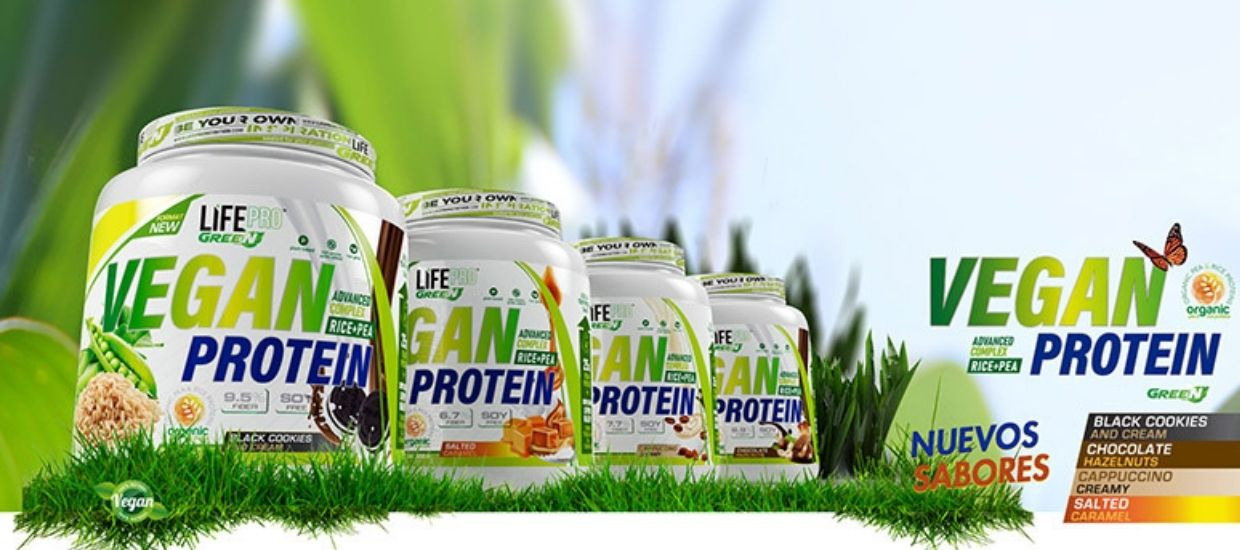
Life Pro has a vegan protein supplement called Vegan Protein Organic Protein.
This supplement has been designed with 2 different sources of pea and rice protein from organic sources. All the ingredients used to make Vegan Protein come from organic farming.
With 71%, 76%, or 77%, depending on the flavor, of protein in its composition, it ranks as one of the purest vegan proteins on the market.
In addition, in terms of other macronutrients, it contains less than 1% carbohydrates and fat in its composition.
When should you take vegan protein?
- It can be taken at any time throughout the day when we need a dose of protein in the body.
- After workouts, to contribute to muscle mass gain.
- For breakfast, snacks, between meals, etc.