

If you are developing a fast-paced training session where the goal is to run faster, here are some tips you can follow to improve your performance.
What affects speed
To improve your speed, you need to know the many factors that affect your speed and pace.
Good performance is very important when it comes to accelerating, and it has a lot to do with your body. Ultimately, it plays an important role in how quickly your body can move, as your vital muscles help you run all the way and reduce the risk of injury or injuries.
Stride:
The greater the stride length, the more ground you will be able to cover, allowing you to maintain your speed at a higher level.
This can affect how quickly you can hold yourself to the ground while running. Shorter steps allow you to control how quickly your foot hits and pushes off the ground.
Thus, short and frequent strides will help maintain speed while running.
More muscle means that you can get off the ground faster and with more force.
However, due to the emphasis on endurance and visual acuity, leanness is much more relevant than skeletal muscle for long-distance races or marathons.
Body weakness:
If you have not stretched or rested since your last workout, you will not be able to run as fast as you would like. It is important to complement every workout with stretching and relaxation before staying active.
How to stay fast while running
To run fast, you need to improve your running skills and train more often while running.
You should consider the following:
- Maintain the sprint process properly.
- Running mechanics are the most difficult part of the running process.
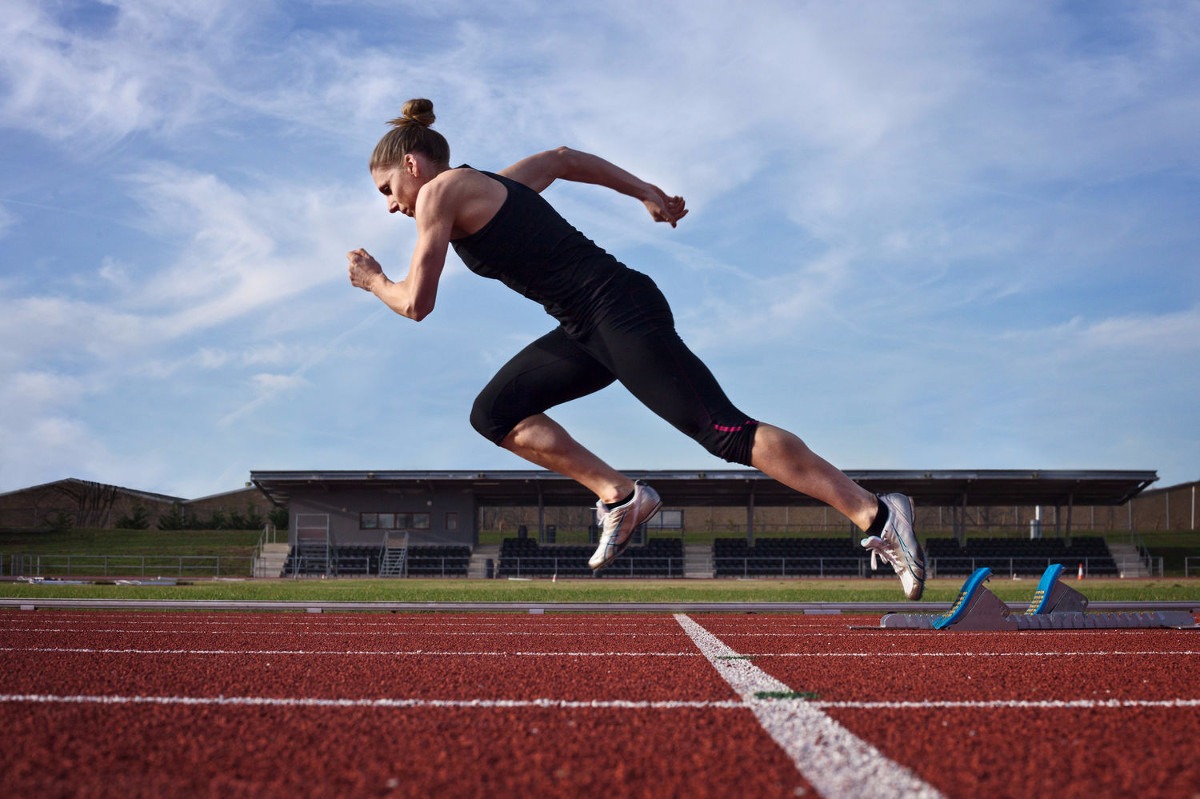
- To run at a fast pace with the best possible performance, you must maintain good body posture (including your spine and a slight forward lean) while keeping your neck and shoulders under control.
- Avoid straining your body and keep your hands and fingers loose.
- Remember that running incorrectly not only slows you down, but can also hurt you.
- An excellent way to relax your muscles is to warm up before a workout or event.
- Warming up your quadriceps, hamstrings, glutes, and calves can improve mobility, improve movement, increase range of motion, and prevent injuries. Run toward the ball of your foot.
- To improve sprint performance, push off the ground with the ball of your foot (not your ankle) as soon as your ankle lifts off the ground.
- While running, bend your arms at a 90-degree angle and away from your legs to balance your body and increase strength.
- Make sure your hands are moving, not your whole body.
- Take the shortcut.
- Improve your stride speed and reduce your stride length. Longer strides will keep you out of control in the air for longer periods of time, while shorter distances will make you move faster.
- Breathe correctly.
- Breathing should be an important part of your fast pace because it oxygenates your muscles.
- Synchronize your steps and your breathing to help you maximize your potential.
Running requires practice.
The faster you train, the sooner you will be able to control your pace and use your body’s strength in a positive way. You can do sprint drills and exercises such as high knees, ankle exercises, and many other important exercises to build strength and start running faster. Adding strength training to your workouts will help strengthen your body. Get professional help.
Without a doubt, one of the best ways to improve and track your success is to ask your coach for advice.