
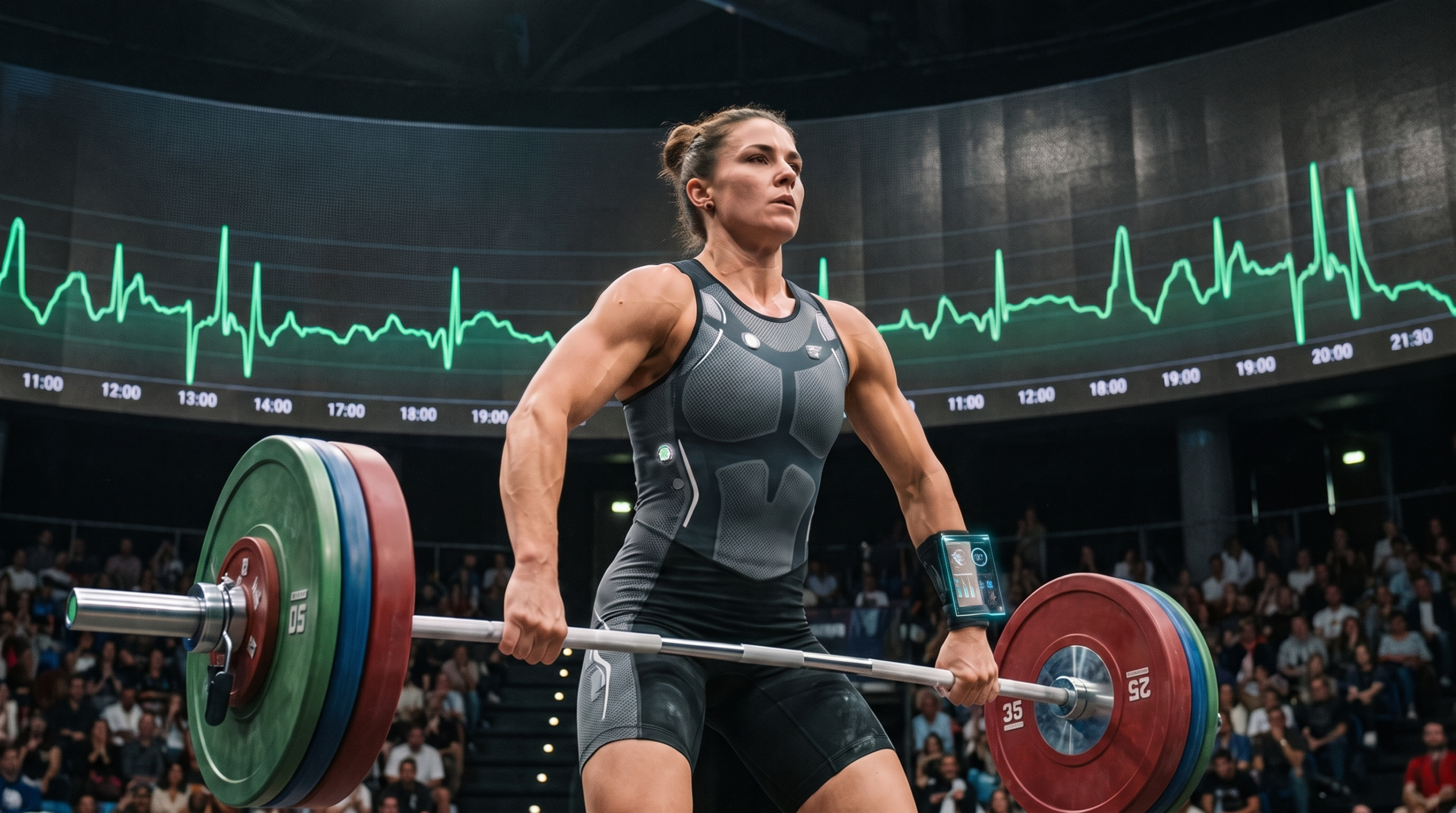
If you train for strength, you have probably heard about creatine hundreds of times. It is found in gyms, on social media, in powerlifting competitions and in conversations about hypertrophy.
But let’s get to the important question: is it good to take creatine if you train for strength? What does it really do, and which part is supported by the evidence?
To understand it, there is no need to overcomplicate things.
Creatine and strength training: what is the relationship?
When you lift a lot of weight, your muscle needs energy, and it needs it very quickly.
Think, for example, of a heavy set of squats, deadlifts or bench presses. You are not making a gentle effort for half an hour. You are performing a short and very intense effort.
This type of exercise relies particularly on an energy system in which phosphocreatine plays a role.
Put simply, phosphocreatine helps the muscle quickly replenish its supply of ATP, one of its main immediate sources of energy.
That is why there is so much scientific interest in studying creatine for strength training and other sports in which short, high-intensity efforts are repeated.
So, does creatine make you stronger?
Here, we need to distinguish between two things.
One thing is what different studies have observed when examining creatine and maximal strength alongside training programs.
Another is what we can directly state about the effect of taking creatine.
In the European Union, there is a very specific authorized health claim:
Creatine improves physical performance in successive bursts of short-term, high-intensity exercise.
To obtain this beneficial effect, the daily intake must be 3 grams of creatine.
This is particularly relevant to activities in which we perform intense efforts again and again.
Why is it so popular in the gym?
Imagine a typical session:
Squat. Rest. Another set.
Bench press. Rest. Another set.
Deadlift. Rest. Another set.
It is precisely these successive sets of short, high-intensity efforts that explain why creatine is studied so extensively in strength training.
This does not mean that taking creatine will automatically turn a 100 kg squat into a 120 kg squat.
Creatine does not replace training.
What we do know is that there is enough evidence to state that it improves physical performance in this specific type of effort when the conditions established for its consumption are met.
Creatine and hypertrophy: does it help you gain muscle?
This is another of the most common searches: creatine and hypertrophy.
And here it is worth avoiding an overly simplistic line of reasoning:
taking creatine ≠ automatically building muscle.
To develop muscle mass, factors such as strength training, diet, adequate protein intake, rest and consistency still matter.
Creatine has been extensively studied alongside strength and hypertrophy training programs, but that does not mean it replaces any of these factors.
That is why it is better to think of it as a tool within your training, not as the element solely responsible for muscle growth.
Creatine and powerlifting: why is it discussed so much?
The relationship between creatine and powerlifting makes quite a lot of sense when we understand how this sport works.
In powerlifting, the goal is to move as much weight as possible in three lifts:
squat, bench press and deadlift.
These are very intense efforts of short duration.
In addition, during training you do not perform a single lift and then go home. You normally do different sets and repetitions of intense efforts.
It is precisely in successive sets of short, high-intensity exercise that we find the recognized effect of creatine.
The same logic helps explain why it is also studied in other strength and power sports.
What if I do weightlifting?
The reasoning is similar.
Snatches, cleans and jerks are explosive movements that require you to produce a great deal of force in a very short time.
That is why creatine is also scientifically interesting in sports characterized by short and very intense efforts.
That does not mean that all athletes will respond in exactly the same way.
Individual responses may vary.
Does everyone respond to creatine in the same way?
No.
And this is important because in sports nutrition, there is almost never a case where “exactly the same thing happens to everyone.”
Initial muscle creatine stores can vary between people. Diet is one of the factors related to these differences, since some animal-based foods provide creatine.
Therefore, when we discuss study results, we are talking about trends observed in groups of people, not a guarantee that every individual will experience exactly the same result.
Does more creatine mean better results?
That is not how it works.
Taking twice as much does not mean getting twice the effect.
For the authorized claim regarding physical performance, the beneficial effect is obtained with a daily intake of 3 g of creatine.
If you want to explore amounts in more detail, you can consult our guide on how much creatine to take per day.
And if your question is when to take it or how to incorporate it into your routine, you can find more information in our guide on how to take creatine.
When do its effects start to become noticeable?
Here too, it is worth avoiding promises such as:
“Take creatine and in three weeks you will lift more weight.”
The reality is much less spectacular and much more interesting.
Creatine supplementation can progressively modify muscle creatine stores, but performance also depends on many other variables: training, rest, diet, sporting experience and individual characteristics.
That is why it makes no sense to guarantee that a person will notice a particular improvement on a specific date.
Does creatine replace protein?
No.
Although they constantly appear together when we talk about sports nutrition, creatine and protein are not the same thing.
Proteins contribute to the growth and maintenance of muscle mass.
Creatine, for its part, has a different authorized claim related to improving physical performance in successive bursts of short-term, high-intensity exercise.
Therefore, they serve different roles.
Frequently asked questions
Is it good to take creatine if you train for strength?
Creatine has been extensively studied in the context of exercise and strength training. The authorized claim in the EU states that creatine improves physical performance in successive bursts of short-term, high-intensity exercise, with a daily intake of 3 g.
Is creatine useful for maximal strength?
The relationship between creatine and maximal strength has been the subject of numerous studies. However, it is important to distinguish the results of specific studies from the authorized health claim for creatine, which refers to performance in successive bursts of short-term, high-intensity exercise.
Is creatine useful for hypertrophy?
Creatine and hypertrophy have been studied together in numerous studies related to strength training. However, gaining muscle mass depends on multiple factors, and creatine does not replace training, diet or adequate protein intake.
Is creatine useful for powerlifting?
Powerlifting is characterized by short, very high-intensity efforts, so there is a clear relationship between the characteristics of this sport and the type of exercise referred to in the authorized claim for creatine.
Do I need to take more creatine if I train every day?
Training more days does not automatically mean needing more creatine. For the authorized claim regarding physical performance, the beneficial effect is obtained with a daily intake of 3 g of creatine.
Does creatine work immediately?
It should not be presented as a product that causes a spectacular change in performance overnight. Its use should be understood within the broader context of training, diet and rest.
To sum up: creatine and strength, without miracles
If you train for strength, you do not need to think of creatine as something complicated.
Muscles need energy to perform intense efforts. Phosphocreatine contributes to the rapid availability of energy during this type of exercise and, for that reason, creatine has been the subject of research in sports nutrition for decades.
The important thing is not to turn that evidence into promises that do not exist.
Creatine does not replace good training, does not automatically turn everything you eat into muscle and does not guarantee that you will add weight to the bar in a few weeks.
What we can state is much more specific: creatine improves physical performance in successive bursts of short-term, high-intensity exercise. The beneficial effect is obtained with a daily intake of 3 g of creatine.
And for someone who trains for strength, understanding this difference is much more useful than any spectacular promise.