What are carbohydrates?
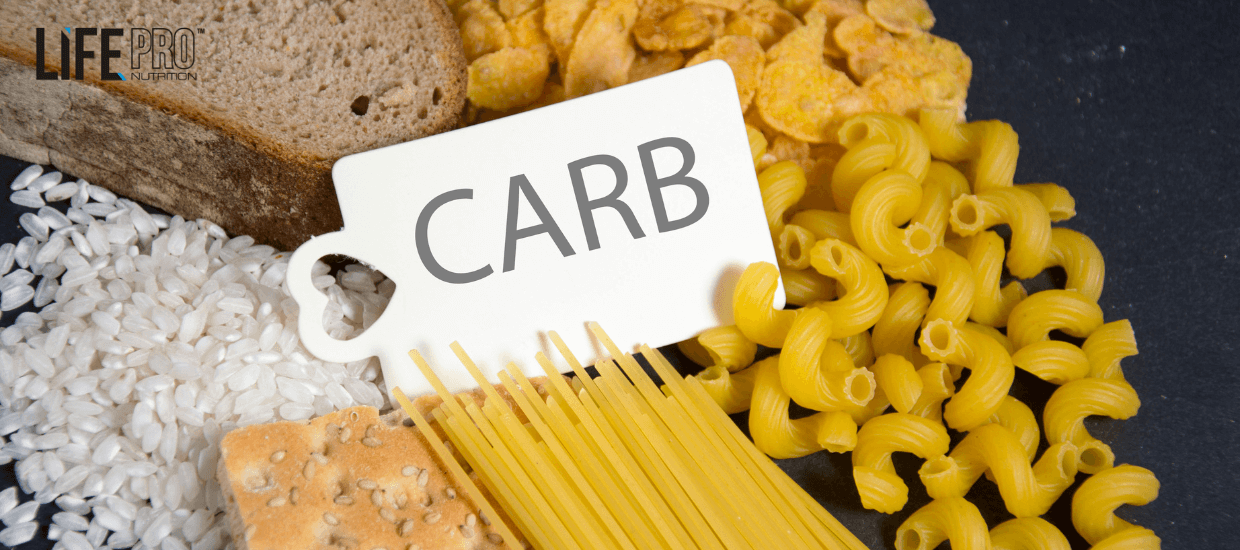
Carbohydrates, also known as carbohydrates or glucides, are one of the 3 main groups of nutrients. Glucides are made up of carbon, oxygen and hydrogen, and their main functions are related to providing energy to the body.
The metabolism of carbohydrates is regulated by hormones. Mainly, there are 2 that play a highly relevant role: insulin and glucagon. Insulin is secreted by the pancreas. It occurs as a result of high blood glucose levels, as it is necessary for glucose to be stored and taken up by the cells.
 |
LIFE PRO ENDURANCE RAW FRUCTOSE 800G
Raw Fructose es un suplemento deportivo que pertenece a la línea Endurance, que aporta fructosa, un hidrato de bajo índice glucémico, que favorece el aporte de energía. |
10.22€ 11.36€ | Ver producto |
 |
LIFE PRO ENDURANCE MALTO DEXTRIN 800G
Malto Dextrin es un suplemento deportivo que pertenece a la nueva línea Endurance de Life Pro diseñado con el fin de aportar carbohidratos de manera rápida y mantener los niveles de energía. |
7.65€ 8.50€ | Ver producto |
What are the functions of carbohydrates in the body?
The main function of carbohydrates in the body is to provide energy. When consumed, they are broken down into glucose so that they can be used, and this glucose is used by cells as fuel. Although the other macronutrients can also be used as a source of energy, carbohydrates are the most common source of energy for the brain and muscles.
They can also be used as an energy reserve when the body requires it. Carbohydrates are stored as glycogen in the liver and muscles, where they can be quickly converted into glucose for use.
Dietary fiber derived from some carbohydrates is essential for regulating intestinal transit, keeping it in optimal condition and preventing, for example, constipation. In addition, it plays a fundamental role in controlling appetite. Fiber adds greater volume to food and promotes a feeling of satiety.
The classification of carbohydrates, their structure and examples
We classify carbohydrates according to the number and complexity of the sugars that make up their structure.
Simple carbohydrates:
Monosaccharides: they contain a single sugar in their composition. Within this group we find:
- Glucose: mainly present in fruit, honey and dairy products.
- Fructose: found in some fruits and vegetables. It can also be found in processed foods that contain “fructose syrup”.
- Galactose: found mostly in dairy products. It is formed when lactose is broken down.
Disaccharides:
As their name indicates, they are made up of 2 sugars. Within this group we find:
- Sucrose: formed by glucose + sucrose. It is commonly known as table sugar. It is found in a large number of foods. It is widely used as a sweetener in beverages and foods.
- Lactose: present in milk and its derivatives. It is made up of 1 molecule of glucose + 1 of galactose.
- Maltose: found in foods such as beer and sprouted cereals. It is formed by the breakdown of starch during the digestion process. It is made up of different glucose molecules.
Complex carbohydrates:
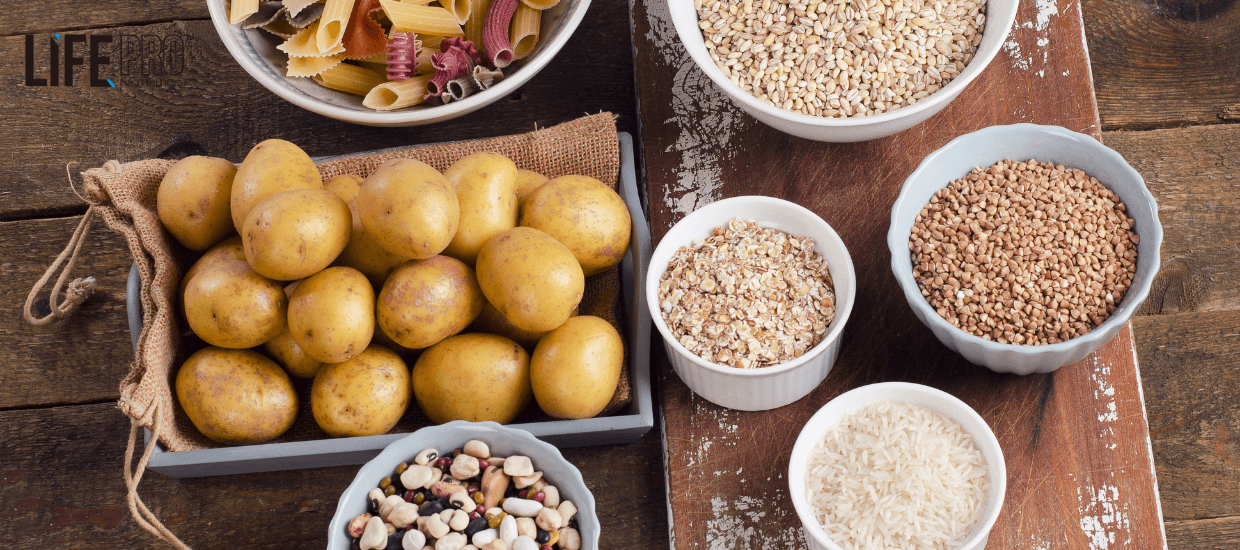
- Starch: this is the carbohydrate present in foods such as legumes, potatoes, sweet potatoes, cereals such as rice, wheat or corn, etc. It is the main (though not the only) source from which people obtain energy.
- Glycogen: this is a polysaccharide that serves as a form of energy storage. There is muscle glycogen and liver glycogen. Glycogen is broken down into glucose when required.
- Dietary fiber: this carbohydrate has the peculiarity that it cannot be digested by the body. We can find dietary fiber in foods such as fruits, vegetables, whole grains, legumes, etc. Although we cannot digest it, its consumption is essential for regulating and maintaining good intestinal transit health.