Is gelatin vegetarian?
Animal gelatin is generally made from the collagen in animal bones and cartilage through treatment with alkalis or acids due to the cooking effect of pigs. It usually appears on the label under the additive E-441.
On the other hand, vegan or plant-based gelatin is mainly obtained from red algae and comes in powder and fiber form. It is said that the gelling power of gelatin is 10 times greater than that of animal gelatin; in this case, boiling at almost 90ºC is necessary to obtain the desired effect. It is not recommended to use more than 1.5g or 2g per 0.5 liter of liquid due to its high gelling power.
The benefits of eating plant-based gelatin
In addition to the non-commercial benefits of animal farming, using gelatin can provide the following health benefits:
- Its calorie content is almost zero.
- Highly soluble fibers.
- It is a vaccine against colon cancer.
- Thanks to the feeling of fullness, it is a friend of weight-loss diets. How plant-based gelatin is used in vegan cooking
3 main ingredients for making vegan gelatin
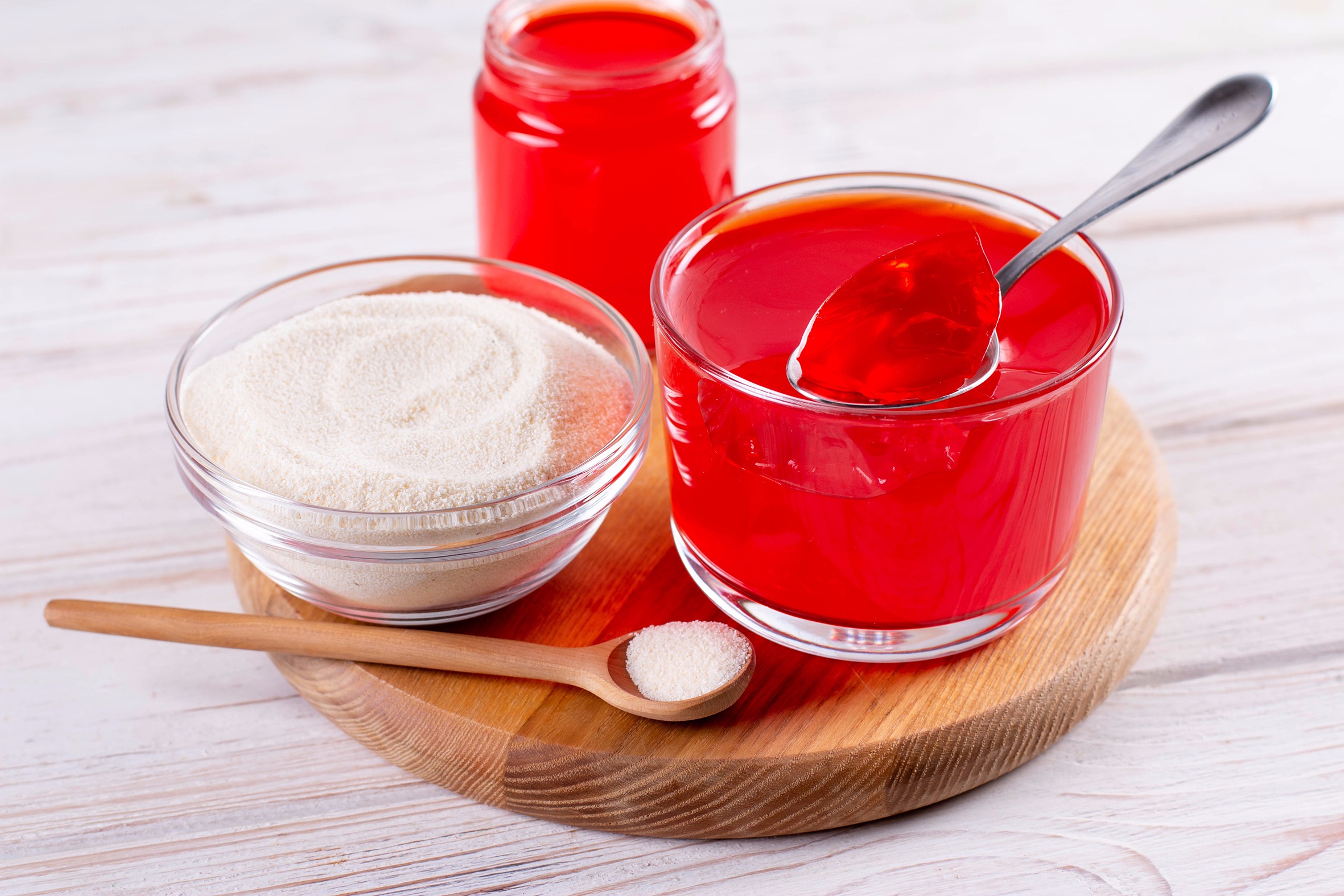
1. Agar
Agar is a type of algae available to almost all doctors today, and it can also be found online in our vegan stores in strip and powder form. It is available in many forms (flakes, powders, or sheets).
Its enormous ability is its capacity to absorb water (up to 300 times its weight) and turn it into gelatin.
The effect is dense, resistant to gelatin, and a small amount is enough to set a glass of water.
What it is: cooked and pressed algae. Most commonly used in: Asian desserts and compact gelatins.
Flavor and Texture: It is tasteless and has a harder and denser texture than the others.Instructions: Agar must be heated to dissolve properly. Powdered agar is easier to measure and use. Bars and flakes can be pre-dissolved in water or ground using a coffee grinder or spice grinder. It sets in one hour at room temperature.
An important and crucial point to keep in mind is that it does not coagulate fatty dishes well, so it is not suitable for thickening sauces or for fatty dishes. 1 teaspoon of gelatin = 1 teaspoon of powdered agar (this gelatin corresponds to 1 cup of water) Making flour = 1 tablespoon, making 1 teaspoon of flakes = 1/2 agar bar.
2. Carrageenan or Irish moss
Irish moss carrageenan, or carrageenan, has also been used for its gelling effect, but unlike agar agar, it is often used as a liquid mixture. Ingredients: dried algae; Carrageenan extract is used in some vegan products.
Commonly used in: soft gelatin, mousse, soup, ice cream, etc. Flavor and texture: it is tasteless and slightly softer than regular gelatin. It melts in your mouth. It is only used to obtain a soft gel.
Directions: take the carrageenan in the form of dried algae (whole, not powdered), rinse well, soak in water for 12 hours until it swells, then boil it with the water. Use 1 ounce of dried carrageenan to reserve 1 cup of water.
3. Tapioca or cassava powder
What it is: Cassava is a genus of plants in the Archaeae family that grows in South America, Africa, and the Pacific and has a rich and nutritious root system. Common use: it is most often used in smoothies and shakes that have been soaked in juice and have a slight aroma.
Directions: Soak the tapioca in 0.5 liters of cold milk for 10 minutes and boil 1⁄2 liter of water with the cinnamon and vanilla pods. When it boils, add all the ingredients and the water to the tapioca and continue. Add the milk until the tapioca is translucent, grind the coconut, and add the blueberries and raisins 15 minutes before finishing. (Cooking time approximately 40 minutes). Pour into a special glass mold and let cool.