
What is protein?
Proteins are macromolecules that are made up of smaller parts, which are called amino acids. The main function of protein, and therefore of amino acids, is the formation of tissues.
Amino acids are made up of hydrogen, carbon, and oxygen, together with nitrogen in their amino group. Also, certain types of proteins may contain sulfur molecules.
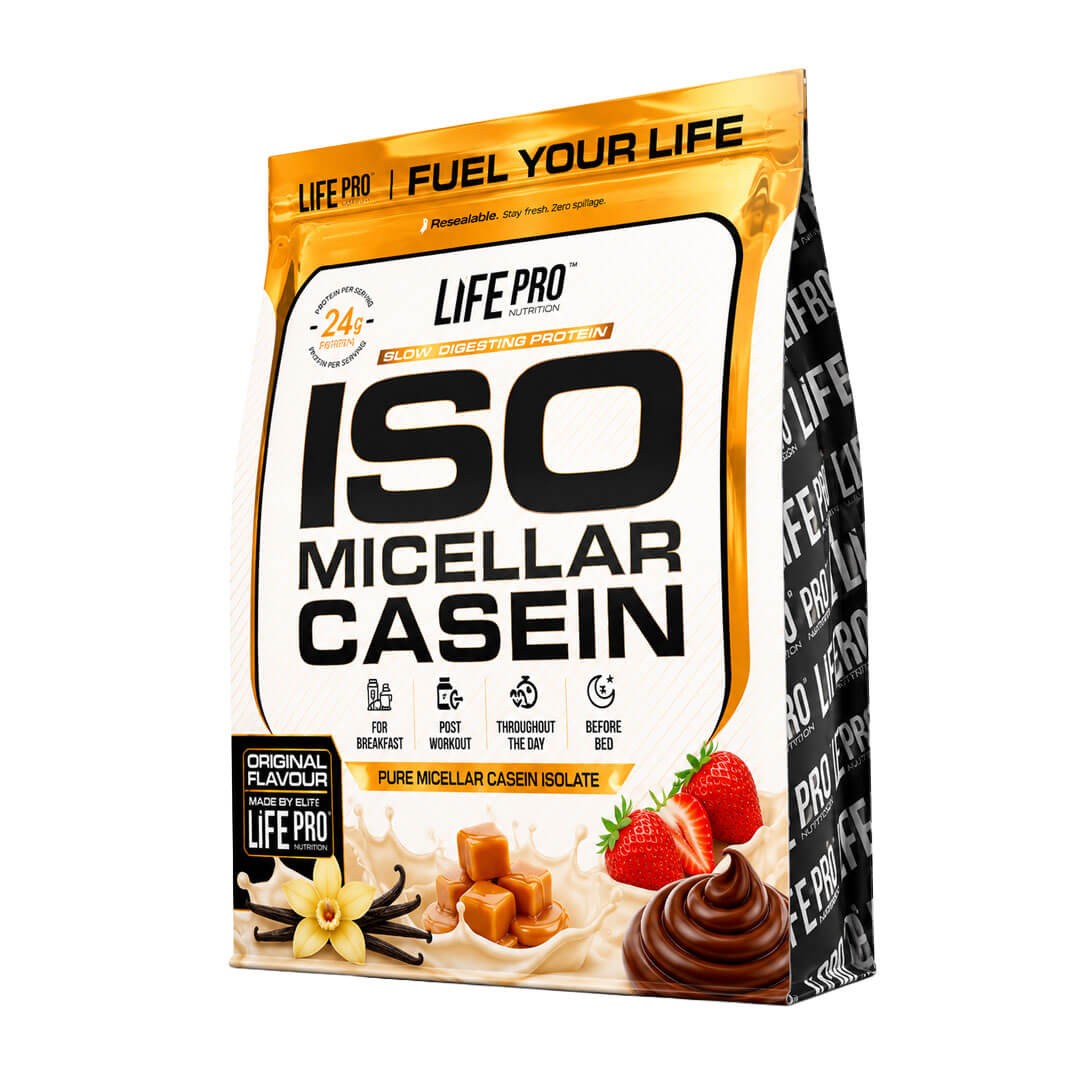 |
LIFE PRO MILK PROTEIN ISOLATE MICELLAR 900G
Aislado de caseína micelar nativa Lacprodan® MicelPure™ (86,6%) de máxima pureza. Proteína de absorción lenta que nutre tus músculos durante horas, ideal antes de dormir. Con enzima Tolerase® L para una digestión cómoda. Recuperación prolongada, saciedad duradera. |
33.42€ 37.13€ | Ver producto |
 |
LIFE PRO ISOLATE GOURMET EDITION 900G
La nueva Proteína aislada diseñada por Life Pro. Nueva línea de sabores gourmet. Elaborada con proteína de suero de leche. |
44.59€ 49.54€ | Ver producto |
The classification of amino acids:
Among all amino acids, an initial classification can be made according to whether they are:
- Proteinogenic
- Non-proteinogenic
Proteinogenic:
From a nutritional point of view, these are the most important. They are the amino acids that can also be found in BCAAS, MAP, or EEAA supplements.
There are a total of 20 proteinogenic amino acids. Among these 20, we can distinguish between:
- Essential amino acids: those that cannot be produced by the body. They must be obtained through food. There are eight essential amino acids: valine, leucine, isoleucine, threonine, lysine, methionine, phenylalanine, and tryptophan
- Amino acids that are not essential, which can also be synthesized by the body.
Non-proteinogenic
They originate from the previous group (proteinogenic amino acids). They have biological functions.
Their main functions are as follows:
- Energy production.
- They can lead to the formation of peptides and other proteins.
- The formation of biogenic amines (nitrogenous compounds found in fermented foods and beverages).
Protein quality:
When assessing and choosing a protein source, different aspects must be taken into account. Protein quality also refers to an index that indicates the number of essential amino acids a protein source contains. To be considered high-quality protein, it should also contain the 8 essential amino acids that the body cannot synthesize on its own.
The biological value of protein:
Biological value refers to the body’s ability to absorb, synthesize, and use the protein source provided.
As a general rule, foods of animal origin, as well as the protein supplements derived from them, are considered to have high biological value. Some examples of high-biological-value protein are the following:
- Casein, whey protein
- Eggs, different meats, etc.
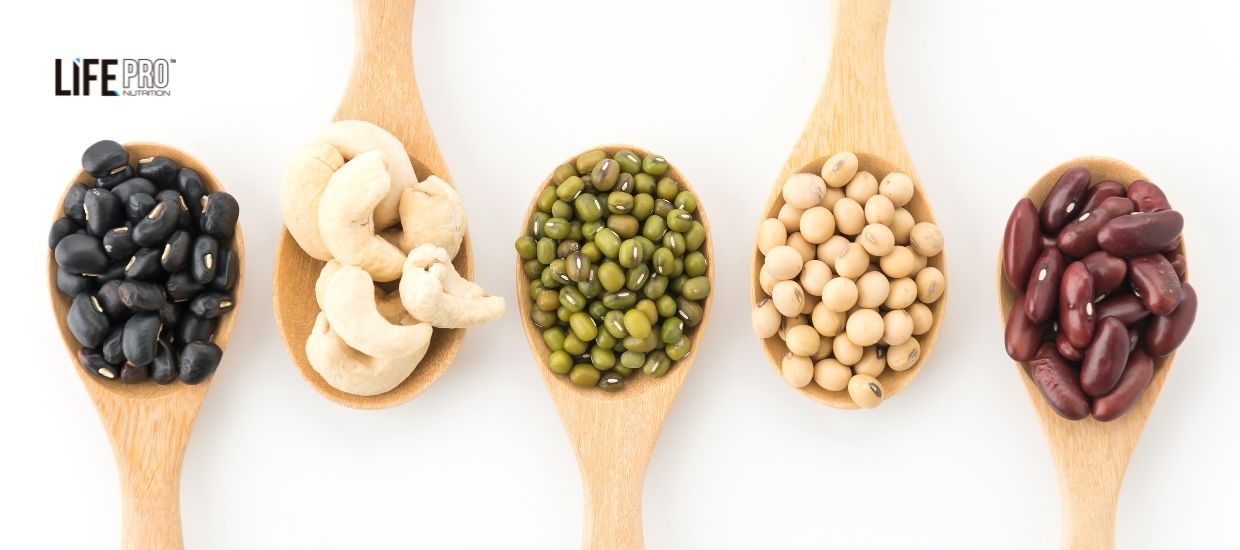
On the contrary, foods of plant origin are not considered to have high biological value because, in general, they do not contain all the essential amino acids in their composition, or contain them in insufficient proportions. This is one of the reasons why different plant-based sources are usually combined to obtain a complete protein.