

The grapefruit, also known as pomelo, is a citrus fruit that belongs to the Rutaceae family. It originated in the 18th century in the Caribbean. It began to be cultivated as a hybrid between the sweet orange tree and the pummelo, or Chinese grapefruit.
Since its discovery, varieties of grapefruit have been developed. Some of the most popular varieties include white, pink, and red grapefruit. Nowadays, this fruit is cultivated in various parts of the world, including countries such as China, Estados Unidos, México, Argentina, and Israel. The grapefruit season varies depending on the region where it is grown, but in general, grapefruit is a winter fruit. In España, it is especially cultivated in the Murcia region from November to May.
The properties of grapefruit:
Source of vitamins:
Grapefruit is an excellent source of vitamin C, vitamin A, and B vitamins. Vitamin C is known for its antioxidant properties. It contributes to the proper functioning of the immune system and helps combat oxidative stress. Vitamin A supports the normal condition of vision and skin.
Per 100 grams:
| Vitamin C | 31,2 mg |
| Vitamin A | 1,15 µg |
| Vitamin B1 | 0,034 mg |
| Vitamin B2 | 0,027 mg |
| Vitamin B3 | 0,204 mg |
Antioxidants:
In addition to vitamin C, it contains antioxidants such as lycopene and various flavonoids. Lycopene is a carotenoid responsible for the pink or red color in some grapefruit varieties, especially pink or red grapefruit. Not all grapefruit varieties contain it. Lycopene is an antioxidant that helps neutralize free radicals.
Flavonoids are present in the flesh and peel of grapefruit. The most common flavonoids include naringin, quercetin, and hesperidin. In addition to their antioxidant properties, they also have anti-inflammatory properties.
High fiber content:
Grapefruit is a source of both soluble and insoluble fiber. A medium-sized grapefruit provides between 3 and 4 grams of fiber. It is essential to include fiber in your diet in order to keep the digestive system in optimal condition. Insoluble fiber is the type that increases stool volume, preventing constipation. Soluble fiber forms a type of gel that slows digestion and increases the feeling of satiety.
Caloric value:
Grapefruit, like most fruits, is low in calories per serving. Grapefruit provides 42 kcal per 100 grams of edible portion. It is a rich source of carbohydrates, especially simple sugars such as fructose, glucose, and sucrose. Fructose is the most abundant carbohydrate in fruit.
| Caloric value | 42 kcal |
| Water | 88-90% |
| Carbohydrates
· Of which sugars · Fiber |
11g
7g 1,6 g |
| Protein | 0,8g |
| Total fat | 0,1g |
Similarities and differences
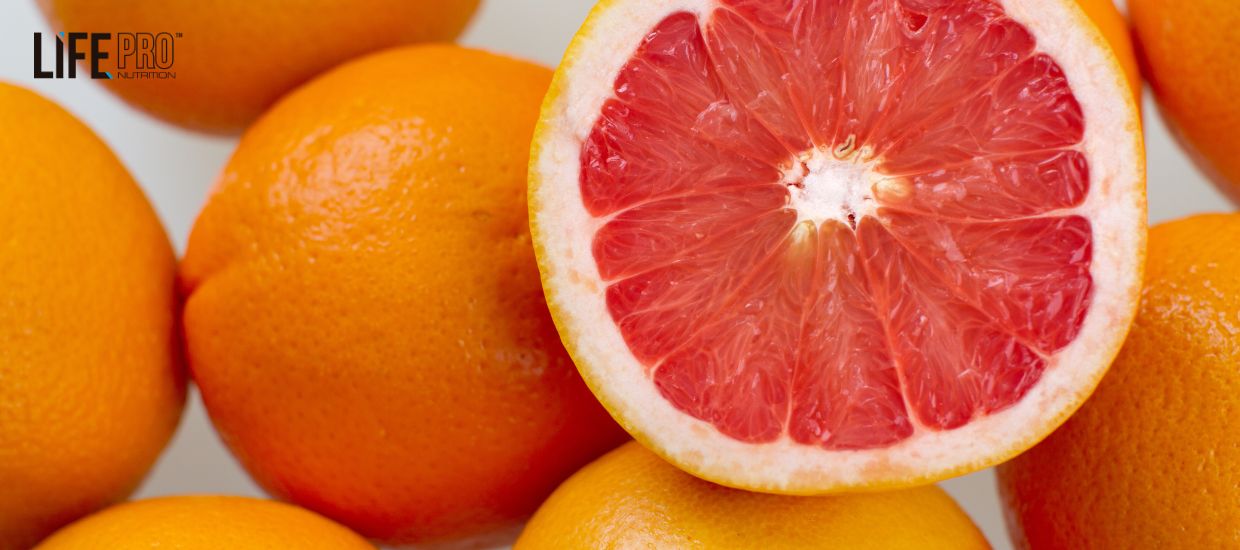
Grapefruit and oranges belong to the same family, which is why they have many similarities. Both fruits belong to the citrus family and share a fairly similar botanical origin. Physically, the main characteristic they share is their peel. They have a thick, orange-colored peel, whose purpose is to protect the flesh inside.
Nutritionally, both contain a large amount of water and share a high content of vitamin C, fiber, and antioxidants.
Regarding their differences, the most striking is their flavor. Grapefruit tends to be more bitter and acidic than oranges, which have a sweeter and less acidic flavor. Another difference is the color of the flesh, which is red or pink, while that of oranges is orange.