

Kefir is a very popular probiotic that has the ability to naturally improve digestive health and strengthen the immune system. In addition, it is a very versatile food that is easy to combine due to its yogurt-like texture.
In this post, we tell you what kefir is, its health benefits and how to consume it.
What is kefir?
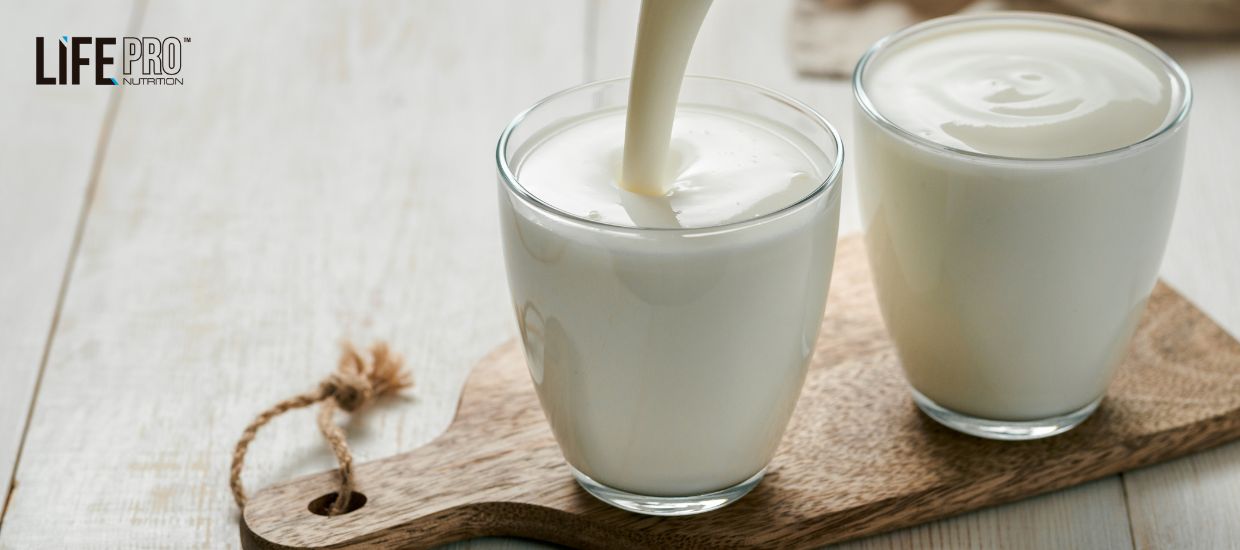
It is a fermented drink with a slightly acidic flavor and creamy texture, very similar to yogurt. It is made from the fermentation of milk using cultures of bacteria and yeasts known as kefir nodules or grains.
Thanks to this process, kefir is a natural source of probiotics, B vitamins, calcium, protein and digestive enzymes, making it a highly beneficial functional food for the body.
How is it produced?
There are two types: water kefir and milk kefir. In this post, we will focus on kefir fermented through milk.
To prepare milk kefir, the grains (a mixture of live bacteria and yeasts) are placed in milk (cow’s, goat’s or sheep’s milk) and left to ferment at room temperature for 24 to 48 hours.
During this time, the fermentation process takes place. The microorganisms transform the sugars in the milk into lactic acid. As a result, a thick, slightly acidic drink rich in probiotics is produced.
When the fermentation process is complete, the liquid is strained to separate the grains, which can be reused. This process can not only be carried out industrially; once the ferment has been obtained, it can also be prepared at home using the same procedure.
The benefits of Kefir:
- Improves digestive health: Thanks to its high probiotic content, kefir helps maintain the microbiota in optimal condition.
- Regular consumption can help relieve problems such as constipation or abdominal bloating.
- Helps strengthen the immune system: certain strains present in kefir have natural antimicrobial properties.
- A source of high-biological-value protein.
- A source of minerals such as calcium and magnesium, which are necessary for maintaining bone health, among other things.
Is kefir a fungus?
No, kefir is not a fungus, although it is sometimes mistaken for one because of its appearance.
The grains are made up of bacteria and yeasts that live in a polysaccharide matrix that gives them their shape. Therefore, it is not a fungus, but it contains yeasts (which are microscopic fungi) along with beneficial bacteria.
Is kefir the same as yogurt?
No. Although both are fermented, kefir has a greater diversity of bacteria and yeasts.
In addition, regarding texture, kefir has a more liquid texture and a broader probiotic profile than yogurt. Yogurt, on the other hand, is denser and thicker.
Does kefir contain lactose?
Yes, it contains a certain amount of lactose. Despite this, during the fermentation process, the bacteria break down a large part of the lactose, so many people with mild lactose intolerance can consume it without any problems. Compared with milk, it contains less lactose.
What is the recommended daily amount I should consume?
It is recommended to start with small amounts (100–150 ml per day). You can gradually increase this amount according to your tolerance. Many people consume between 200 and 500 ml daily without experiencing stomach discomfort. This can occur especially in people who are not used to consuming fermented foods.